







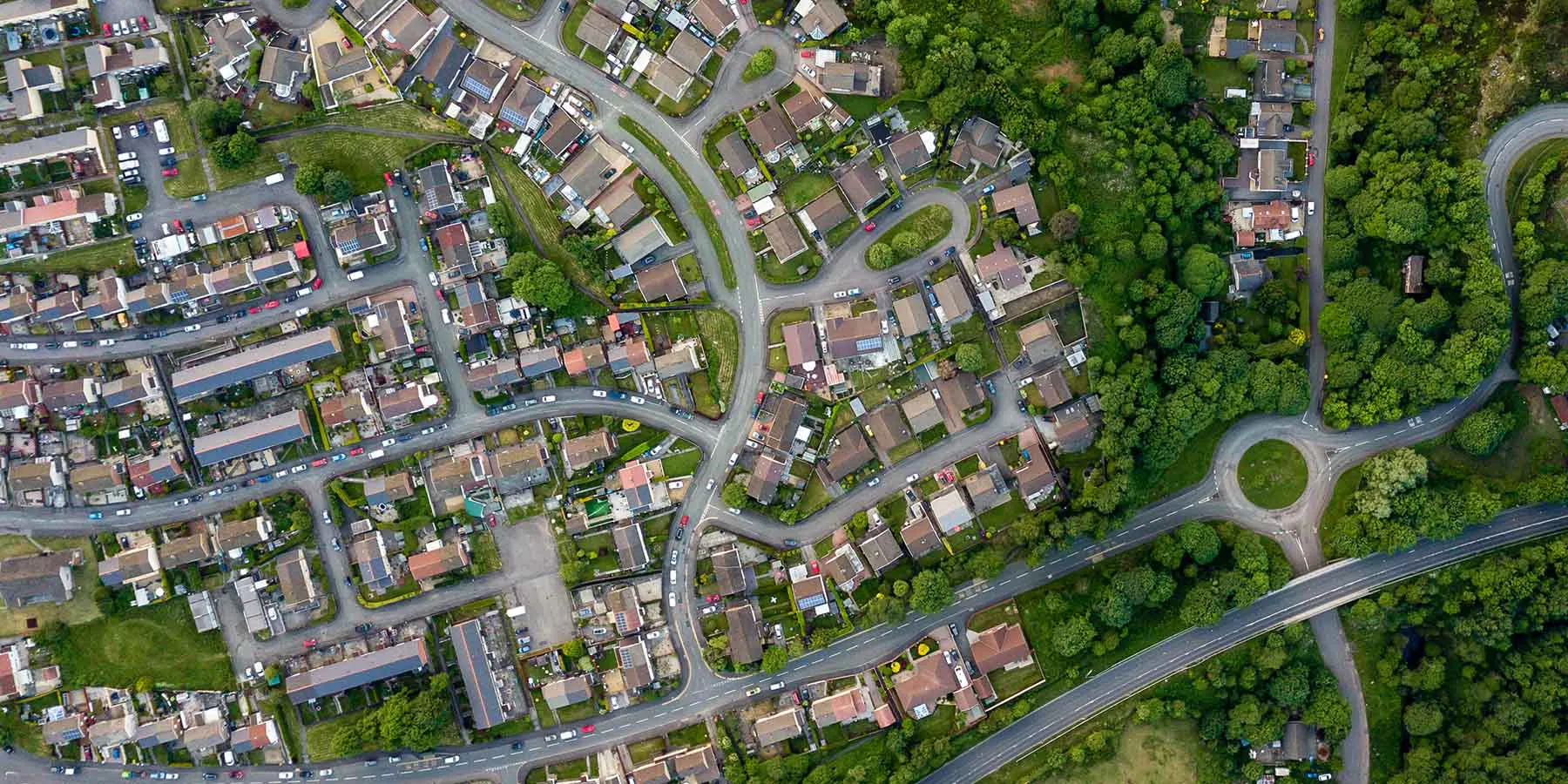
Developing energy masterplans and planning future energy infrastructure requires a combination of technical and commercial expertise.
At Sustainable Energy, we bring experience from government, local authorities, developers, and multi-national companies across hundreds of heat network projects. Our team focuses on meticulous data analysis and practical insights, ensuring every masterplan considers technical and commercial deliverability.
The outcome is a robust, evidence-based masterplan that guides decision-making and reduces technical, financial, and commercial risk before development progresses.
Effective masterplanning requires detailed and extensive data collection and analysis to identify, evaluate and prioritise potential decentralised energy and district energy scheme opportunities and constraints.
Our Masterplanning services include, stakeholder engagement and communication, collection, collation and analysis of large energy data sets.
Our economic assessments include scenario modelling to identify the prioritised solution and present a clear pathway to progress, with detailed risk analysis and mitigation.'
Ready to move forward?

Heat decarbonisation route-maps
Heat decarbonisation often involves a complex relationship between capital investment and carbon reduction. All potentially viable decarbonisation routes and sequences should be assessed and considered to find the optimum pathway.
We develop heat decarbonisation route maps to enable local authorities, network operators, and building/site operators to plan the transition to low- and zero-carbon heat and meet organisational and UK carbon reduction targets. These cover single buildings, clusters of buildings, small networks, and large city-wide district heat networks. By combining heat demand analysis, building stock data, energy source assessment, and infrastructure review, we create actionable pathways showing how low-carbon solutions can be deployed over the short, medium, and long term.
Our experience spans decarbonising single buildings through connection to networks and city-wide networks using large-scale heat pumps, energy-from-waste, industrial, and data centre waste heat.
The outcome is a strategic, evidence-based route map that prioritises interventions, supports informed investment, and accelerates the decarbonisation of heat.

Heat network zoning
Heat network zoning enables local authorities and planners to strategically prioritise areas for district heating deployment, supporting low-carbon planning policy and guiding developers toward network-ready buildings.
Local authorities can use zoning to create priority connection zones, encourage developers to make buildings heat-network ready, and guide investments where they’ll have the biggest impact.
We support councils and developers throughout the zoning process. From heat mapping and spatial analysis to stakeholder engagement, policy alignment, and delivery planning, we provide expert guidance that helps local authorities to implement zoning effectively. The outcome is evidence-based zones that provide clarity for decision-making, facilitate coordinated network development, and support low-carbon growth.

Decarbonisation and net-zero strategy
A deliverable strategy must be technically and economically sound and should address all areas of emissions as an integral system.
By translating net-zero ambitions into structured, evidence-based plans, we help clients reduce emissions, manage risk, and meet statutory or voluntary climate commitments on time.
We provide expert consultancy to help organisations, local authorities, and developers achieve specific carbon reduction targets within defined timeframes, supporting the transition to a net-zero energy future. Our services combine strategic planning, energy system analysis, scenario modelling, and policy alignment to create clear, actionable pathways that balance technical feasibility, cost, and carbon impact.
We work with clients to assess current carbon footprints, identify opportunities for low-carbon technologies, energy efficiency, and system optimisation, and develop roadmaps that set out milestones, priorities, and investment strategies. Whether for a single building, multiple sites, or an entire district, our approach ensures carbon reduction measures are practical, measurable, and deliverable, with progress monitored against regulatory requirements and organisational targets.

Local area energy planning and programmes
We support local authorities, developers, and energy stakeholders through all phases of Local Area Energy Planning (LAEP).
We review plans for the local area energy system, analysing current and future heat and electricity demand, mapping building stock, assessing infrastructure, modelling decarbonisation scenarios, and identifying least-regret interventions.
As LAEP Local Area Energy Programmes move to implementation phases, we translate strategy into action, providing feasibility studies, project prioritisation, funding strategies, stakeholder coordination, pilot project design, and progress monitoring.
We ensure alignment with national and local policy, LAEP guidance in England and Wales, LHEES in Scotland, and heat network zoning requirements. The outcome is a coherent, actionable framework that guides investment, supports delivery, and helps embed low-carbon energy solutions at a local level.

Energy strategy
We develop robust, evidence-based energy strategies that help organisations plan for a low-carbon, resilient, and cost-effective future.
Whether for a single development, a portfolio of buildings, a campus, or a wider local area, our strategies combine technical assessment, energy modelling, stakeholder engagement, and policy alignment to set out clear pathways for decarbonisation.
We assess current and future energy demands, explore opportunities for electrification, energy efficiency, on-site generation, storage, and potential connections to heat networks or waste heat sources. By modelling scenarios around cost, carbon, infrastructure, and phasing, we identify the best combination of technologies and delivery routes to meet client needs.
Our energy strategies consider planning and regulatory requirements, and compliance with local energy policy, LAEP, LHEES, Net Zero targets and heat network zoning. The outcome is a practical, roadmap that guides decision-making and unlocks the full potential of low-carbon energy solutions.
Connecting the City: Bristol’s Low Carbon District Energy Vision
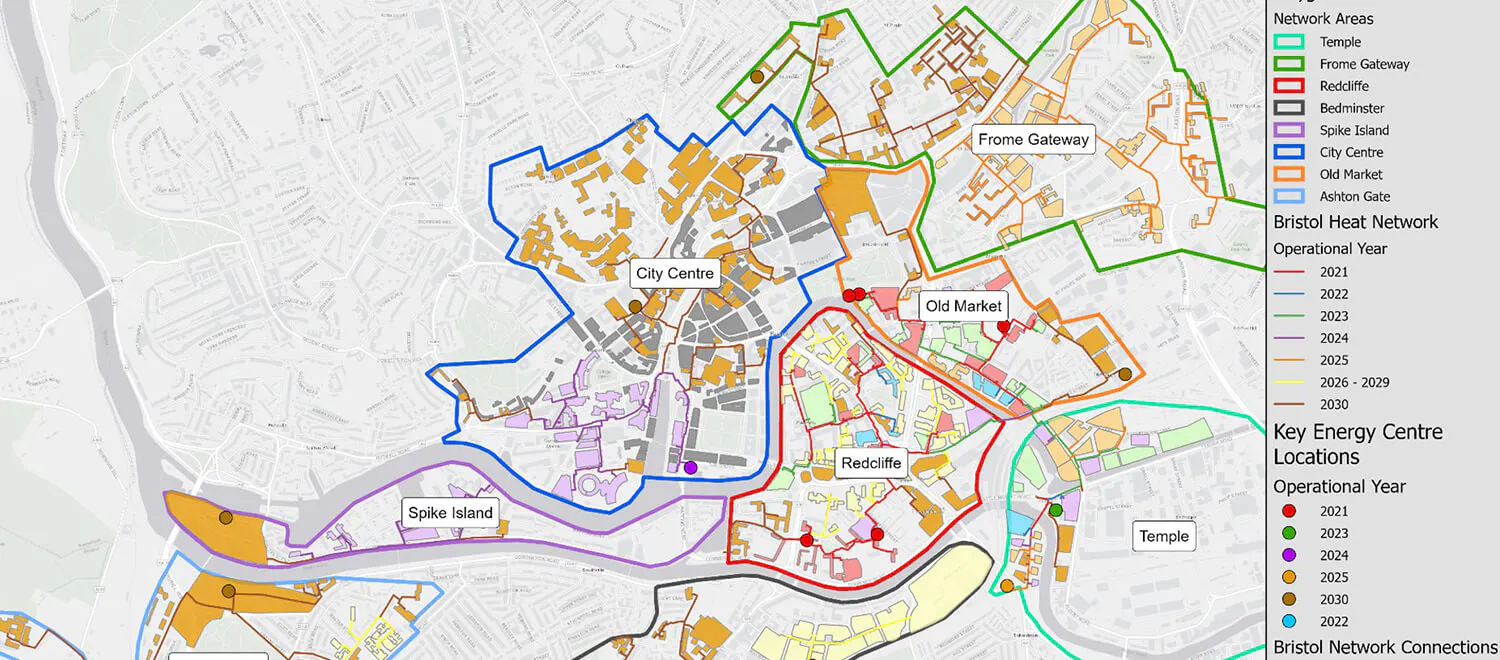
Over six years, we worked with Bristol City Council, Bristol Heat Networks Ltd, and Vattenfall to develop a city-wide decentralised low carbon energy network spanning multiple heat network areas across the city. The combined installed and planned heat supply capacity totals over 61 MW across ASHP, water source, waste water, CHP, and biomass technologies.