








Over the past 25 years, we’ve been providing energy mapping, masterplanning, network design, and technical support through installation and commissioning for urban and rural district energy schemes. Our clients range from Government departments and Local Authorities to Universities and large commercial organisations across the UK. We’re implementation-focused, taking projects from feasibility and techno-economic modelling through design, installation, and commissioning. Our team of engineers, consultants, and modelling experts has market-leading knowledge of low-carbon and renewable technologies, including heat networks, heat pumps, biomass, CHP, Energy from Waste and smart energy grids.
Beyond feasibility and project development our role through commercialisation has strong track record of securing grant funding, securing contracts and taking schemes through financial close and construction. We understand that successful heat networks require more than technical expertise; over the last 25 years we’ve tackled everything from stakeholder engagement and commercial arrangements to economic modelling, planning, environmental considerations, and health and safety. Our practical, hands-on experience means we can foresee potential issues, solve tricky challenges, and keep projects on track from early concept to full operation.
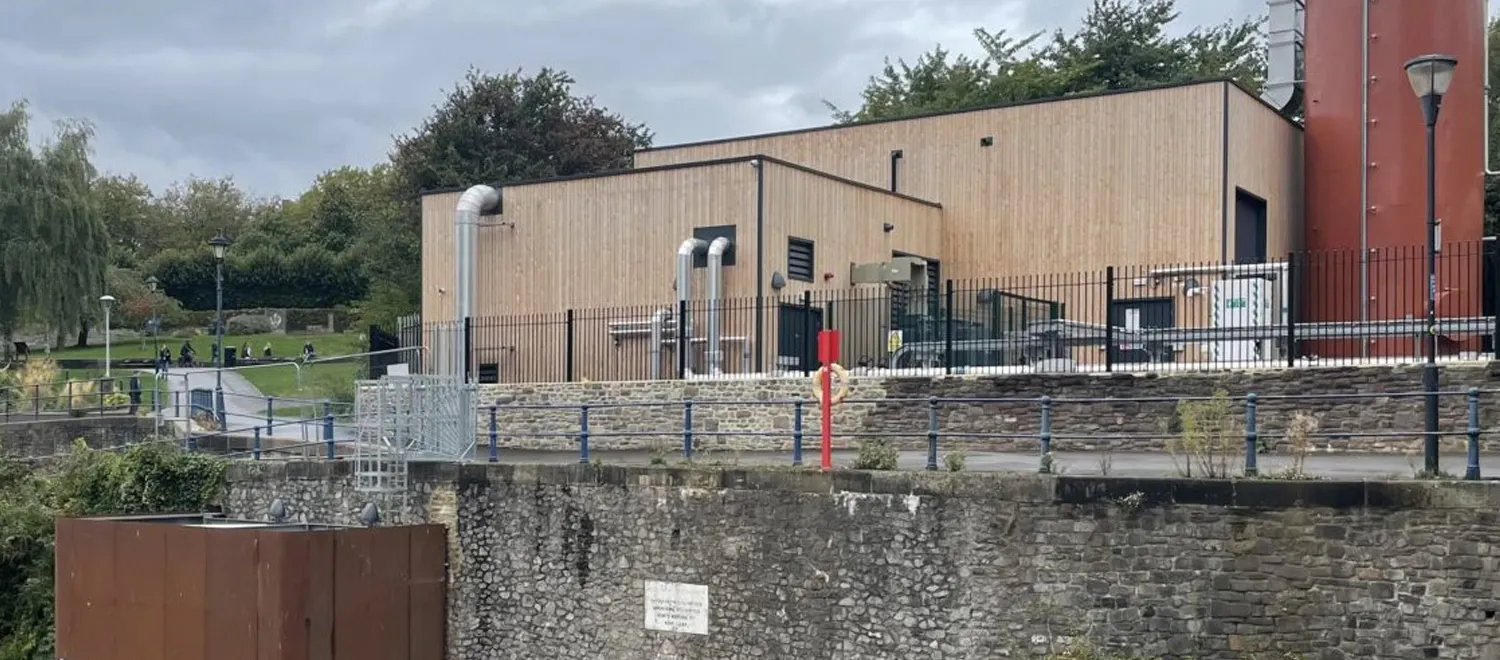
City scale networks
Cities present high heat demand density which means heat networks offer effective and economic solutions for large scale decarbonisation; however, the challenge is beginning the journey, implementing initial viable heat networks that have the capacity to expand and flexibility to distribute heat from multiple waste and low cost sources is what makes them work.
We support, guide and partner with clients to advise through the journey. Developing the vision for the city wide opportunity, finding the key connections and initial phases, assessing energy sources and designing energy centres, developing network routes, working on commercial structures, developing the business case and taking the scheme through the stages of construction and growth.
Rural networks
Where heat demand densities are lower there are also other factors that make successful heat networks in the more rural areas, the lower capital cost of laying pipework in less congested areas combined with local opportunities for lower cost of waste heat has meant many successful schemes have been developed outside of cities.
We have developed village schemes where local energy resources have provided economic schemes for small networks.
Establishing the technical and economic extents of the network, considering the resources, customers and stakeholders.
We understand the use of polymer materials and network routing to reduce capital costs which balance reduced linear heat density.
Ambient networks
As the energy density reduces or heating and cooling demands coexist across areas such as residential developments or campuses the application of ambient networks where the heat and/or cooling systems are installed at the end users and where an ambient source is distributed between them. Sharing heat/coolth and reducing the overall reliance from the source.
With our technology independence we have provided clear and objective technical and economic evaluations of where an ambient of 5th Generation network is the optimum solution for situation and stakeholders.
We have developed feasibility through to detailed design and handover of many leading UK ambient networks.
From large scale residential schemes, to smaller multi occupant commercial buildings and even estate wide hybrid schemes. Each scheme providing heat and cooling to different users.
Our detailed modelling finds the point of maximum viability. We have developed ambient schemes with sources from aquifers, ground arrays, mine water and even balanced from air source.
Campus networks
The defined extents of a campus create a defined project, which, under a single stakeholder, offers opportunities for holistic energy systems.
We’ve developed phased approaches for campuses in which a series of projects has delivered a pathway to a decarbonised heat, cooling and electrical infrastructure.
By connecting different energy users, we develop plans, designs and oversee delivery for campus-wide networks that incorporate residential heat and hot water demands, office heat and cooling, venues and sports facilities.

Social housing networks
Affordable heat and hot water is one of the cornerstones of social housing and heat networks are well positioned to provide reliability and long-term affordability.
We have helped tens of thousands of social homes improve efficiency, decarbonise whilst maintaining affordability.
We do this by ensuring developing schemes, best practice design and optimised operations in our full suite of consulting services.
Strategic Transmission
Strategic heat‑transmission infrastructure — or “heat highways” — enables waste heat from industry and power generation to be transported into urban areas, maximising process efficiency and displacing higher‑cost, higher‑carbon heat sources.
We have mapped regional waste‑heat resources and identified optimal transmission routes and concepts that connect major heat supplies with areas of demand. These strategic networks create value from otherwise wasted heat, support decarbonisation of industrial processes, and reduce urban energy demand. By coupling sectors and enabling large‑scale heat recovery, transmission networks significantly improve the economics of decarbonisation.
Decarbonising CHP and Fossil‑Fuel Networks
Many of the UK’s legacy heat networks were originally developed around natural‑gas CHP. The challenge now is to transition these systems to a low‑carbon future while maintaining resilience, efficiency, and competitive heat costs.
We have supported numerous leading UK schemes, developing decarbonisation strategies, detailed designs, and engineering advisory services that enable a phased and practical transition. Our work includes reducing network temperatures, integrating new connections, leveraging electrical‑infrastructure value, and developing pathways where existing CHP assets continue to deliver carbon benefits and operational value until end of life.
Heat Network Regulation
The UK’s new regulatory framework for heat networks — overseen by Ofgem — introduces consumer‑protection requirements, carbon‑emissions limits, and technical standards governing the design, construction, and operation of networks.
We provide independent reviews across all areas of the regulatory framework, including compliance with the Heat Network Technical Assurance Scheme (HNTAS) and Technical Specification TS1. Our support helps operators, developers, and owners understand their obligations and prepare for a fully regulated heat‑network environment.