







Decarbonising existing buildings depends on good, well-coordinated design. We have extensive experience of delivering these types of projects, and we understand how important it is to balance fabric improvements with low-carbon system upgrades.
A fabric-first approach is key to reducing heat demand where practical, but it must be supported by properly integrated mechanical systems to achieve full decarbonisation. Low-carbon plant, such as heat pumps, needs to be designed to work effectively with the building and distribution systems so it can reliably meet required heating and hot water set points. Good design ensures everything works together efficiently in practice, not just in theory.
Ready to move forward?

Building simulations
Building simulation is a key part of understanding how to decarbonise existing buildings effectively. We model whole-building heat demand and then test different fabric improvement scenarios to see how changes to insulation, glazing, and air tightness affect energy use, cost, and carbon emissions. This allows us to quantify the impact of potential upgrades and identify the most effective interventions. The outputs provide clear, evidence-based insight to support investment decisions and prioritise works. This approach is also highly valuable for grant applications, helping demonstrate carbon savings and scheme viability with robust, modelled data rather than assumptions.

Heating and cooling design
Detailed heating and cooling design is central to decarbonising existing buildings, ensuring low-carbon plant is properly sized, integrated, and optimised for real-world operation. We design both heating and cooling systems using technologies such as heat pumps and heat pump chillers, delivering efficient year-round comfort with minimal carbon impact. We have also developed innovative solutions including borehole-based seasonal thermal storage, enabling heat to be stored in summer and reused in winter, and vice versa for cooling. This approach reduces reliance on conventional plant and grid energy, improving resilience and efficiency. Our designs focus on practical integration with existing building systems while unlocking long-term carbon and cost reductions.

Fabric and ventilation
Upgrading building fabric and ventilation systems is a key part of a holistic decarbonisation strategy. We assess and specify improvements to insulation, glazing, roofs, and other envelope elements, evaluating different materials and U-values to optimise thermal performance and reduce heat demand. Alongside fabric upgrades, we design ventilation strategies that balance energy efficiency with indoor air quality, considering both natural ventilation options and mechanical ventilation with heat recovery (MVHR). Our approach ensures that fabric and ventilation measures work together as an integrated system, supporting lower-temperature heating solutions and improving overall building comfort, efficiency, and carbon performance.

Complex systems modelling
Complex system modelling is essential where building and energy systems become highly interconnected and variable. We model integrated heating and cooling systems involving multiple plant types, diverse building uses, and a range of operational scenarios, including complex or non-standard thermal demands and process loads where applicable. This allows us to test how different technologies interact, identify constraints, and optimise overall system performance across varying conditions. We can also assess phased or area-specific upgrades to understand their impact on demand, carbon, and cost. The result is a clear, evidence-based view of system behaviour that supports robust design decisions in complex, multi-variable environments.
A decade of decarbonisation: Transforming Wales’ largest domestic heat network
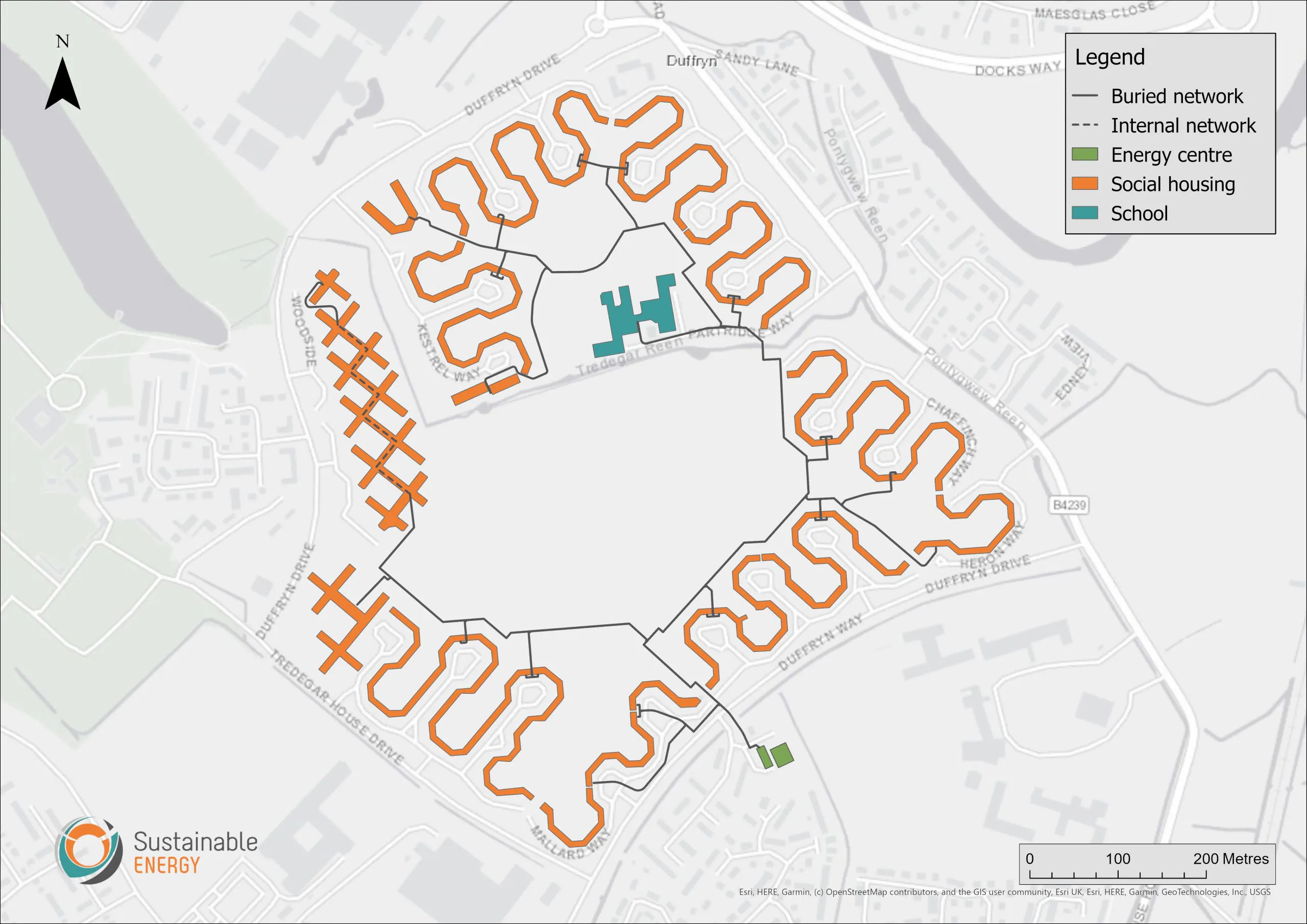
Newport City Council engaged us across a rolling programme of heat decarbonisation works spanning public sector sites including schools, care homes, and leisure centres - currently totalling 24 sites with a combined ASHP capacity of 8.775 MW.