







The Client’s Engineer role pays for itself many times over by reducing capital expenditure, improving operational efficiency, and ensuring plant is designed, installed, and commissioned to best‑practice standards.
We act as an independent technical representative across the full project lifecycle, supporting everything from individual low‑carbon systems to large‑scale district‑energy schemes.
Our work spans project planning, programme optimisation, and continuous progress monitoring during construction. We provide detailed design review, engineering oversight, and assessment of technical variations to maintain quality and cost control. Throughout delivery, we evaluate equipment, methods, and workmanship, review technical submittals and payment applications, and oversee commissioning, testing, and acceptance activities. We also ensure operations and maintenance requirements, lifecycle performance considerations, and all certification, warranties, and compliance documentation are fully captured.
By combining robust technical assurance with strong commercial governance, we help clients reduce risk, avoid costly rework, and achieve reliable, efficient, long‑term system performance.
Ready to move forward?

RIBA Stage 4 to 6
As Client Engineer, we provide independent technical assurance throughout the detailed design, construction, and commissioning phases of low carbon energy projects delivered under design and build arrangements.
At RIBA Stage 4, where contractors develop the detailed design following appointment, we review submissions to ensure design intent is maintained and that proposals remain compliant with the employer’s requirements, tendered scope, and relevant best practice. Our focus is on preventing value engineering or design changes that compromise performance, quality, or long-term operability once the contract is in place.
During RIBA Stage 5 (Construction), we undertake site inspections and quality assurance reviews to verify that installation is being carried out in accordance with the approved design and specification. This includes monitoring workmanship, materials, sequencing, and compliance with design intent and contractual requirements.
At RIBA Stage 6 (Handover and Close Out), we witness commissioning and acceptance testing to confirm systems perform as required. This includes verification of plant efficiency, capacity outputs, control functionality, emergency shutdown systems, and life-safety alarms. Acceptance criteria are defined at design stage and used as the benchmark for sign-off.
Through all stages, we act in the client’s interest to ensure delivery aligns with original performance requirements, reduces operational risk, and achieves long-term asset reliability.

In construction design change
During construction, unforeseen conditions or site constraints may require changes to the original design. In design and build arrangements, the contractor typically develops these modifications; however, we provide independent review to ensure any changes remain compliant with the original design intent, employer’s requirements, and relevant best practice.
We assess proposed design revisions for technical robustness, safety, buildability, and long-term operational performance, identifying any risks or deviations introduced by the change. Where appropriate, we also provide design input and engineering advice to help develop the most suitable and efficient solution.
This approach ensures that necessary changes are implemented without compromising quality, performance, or compliance, maintaining confidence in the final delivered asset.

Inspections and testing plans
We work with contractors to develop comprehensive Inspection and Testing Plans (ITPs) that clearly define the required quality assurance activities throughout installation and commissioning.
These plans set out, in advance, what will be inspected, when inspections will take place, and the acceptance criteria to be met at each stage of the works. They also establish clear documentation requirements, including pressure test records, welding certificates, pipework flushing and cleaning logs, plant and equipment test results, and commissioning records.
By agreeing these requirements at the outset, we provide structure and clarity to the construction programme, ensuring the contractor understands expectations and can plan works accordingly. This supports a methodical, traceable approach to quality control and ensures all necessary evidence is in place to demonstrate compliance and successful completion of the works.

Technical submissions
As part of the detailed design and construction phase, contractors are required to submit both detailed design packages and technical submissions covering all proposed plant, equipment, materials, and system configurations.
We operate a formal approval gateway, reviewing these submissions to confirm alignment with the employer’s requirements, design intent, and applicable standards and best practice. This includes assessment of detailed design outputs as well as equipment data, ensuring that systems are fully integrated, compatible, and deliver the required performance.
Our review considers efficiency, maintainability, lifecycle performance, and operability, as well as compliance with the wider system design and control strategy.
Submissions are formally assessed for approval, rejection, or required amendment, providing a clear and structured control point before procurement and installation proceed. This helps prevent unsuitable or non-compliant design elements entering the construction phase and ensures consistent delivery of the intended asset performance.

Technical quality assurance
Technical quality assurance is central to our role as the Client’s Engineer. We provide independent, engineering‑led oversight that ensures every element of a heat network project, from early design through construction and commissioning, meets the required technical, safety, and performance standards. Our team reviews specifications, drawings, installation methods, and commissioning plans to verify that systems are designed and built to operate efficiently at low temperatures and deliver long‑term reliability.
On site, we monitor workmanship, materials, and compliance with manufacturer requirements and industry standards, identifying issues early and guiding contractors toward effective resolutions. We also validate test results, witness key commissioning activities, and ensure that all technical documentation is complete, accurate, and aligned with regulatory expectations.
Our approach gives clients confidence that their assets are constructed to the highest standard, risks are minimised, and the final system performs exactly as intended — safely, efficiently, and ready for decades of low‑carbon operation.

Heat network inspections
A buried heat‑network pipeline is a high‑value asset expected to operate for more than 50 years, so rigorous inspection during construction is essential. We focus on every stage of installation — from ground preparation and civils works to trenching, setting‑out, and pipe placement — as each step directly affects long‑term performance and reliability.
Our inspections cover preparation and welding procedures, verification and witnessing of non‑destructive testing such as phased‑array ultrasonic testing, and full documentation of certificates and quality records throughout the build. We also witness joint‑integrity tests, surveillance‑system checks, and review backfill schedules before pipes are covered and surfaces reinstated.
We have supervised hundreds of miles of district heating pipe installation, consistently delivering improvements in quality, reliability, and long‑term asset performance across all our schemes.

Site inspection and supervision
Our engineering, construction, and project‑management teams bring extensive experience across the full project lifecycle — from design and specification through construction and into operation. This holistic understanding means that when we undertake inspections or supervise works, we focus not only on compliance and workmanship but also on how each decision affects long‑term performance, reliability, and operational efficiency.
We carry out site inspections at all stages of construction, conduct staged‑completion assessments, and coordinate closely with all parties in the delivery team to maintain alignment and resolve issues quickly. Our supervisors provide clear, proactive guidance, ensuring that expectations are understood, risks are managed, and quality standards are consistently met.
An effective supervisory role is more than oversight — it adds technical value, ensures transparent documentation, and supports a smooth transition from construction into commissioning and operation. Our involvement helps reduce rework, improve build quality, and deliver assets that perform as intended from day one.
Heat from waste: Powering Cardiff's public sector from the Bay
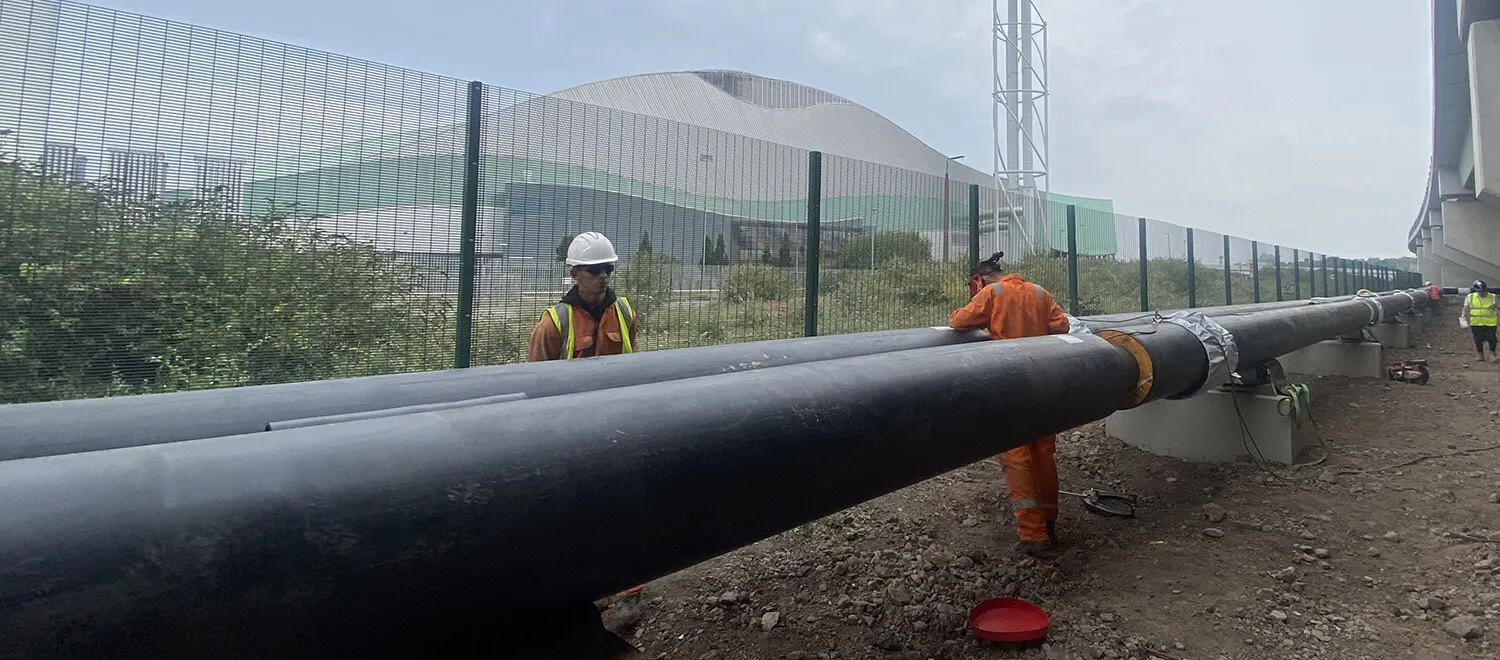
The Cardiff Heat Network supplies low carbon heat from an Energy Recovery Facility (ERF) in Cardiff Bay to public sector buildings across the Bay and southern city centre, with landmark connections including the Senedd, Wales Millennium Centre, County Hall, and Tŷ Hywel.