







/-3.2507407745819727,51.643735646295696,6,0/500x500@2x?access_token=pk.eyJ1IjoibGltZWdyZWVudGFuZ2VyaW5lIiwiYSI6ImNtbHA0NmozZzAwdDgzaHM5MW8zaWs2eWIifQ.jPG-FfO-fBhkFOFoh2gMDQ)
Ty Penallta, built in 2009, serves as the headquarters of Caerphilly County Borough Council. We were engaged across three phases from 2022 to 2025 to assess, design and deliver a 1.2 MW ground source heat pump chiller solution. The project uses a closed-loop borefield to enable inter-seasonal thermal energy storage, and formed part of an ambitious raft of carbon-cutting measures delivered, providing an exemplar of public sector decarbonisation.
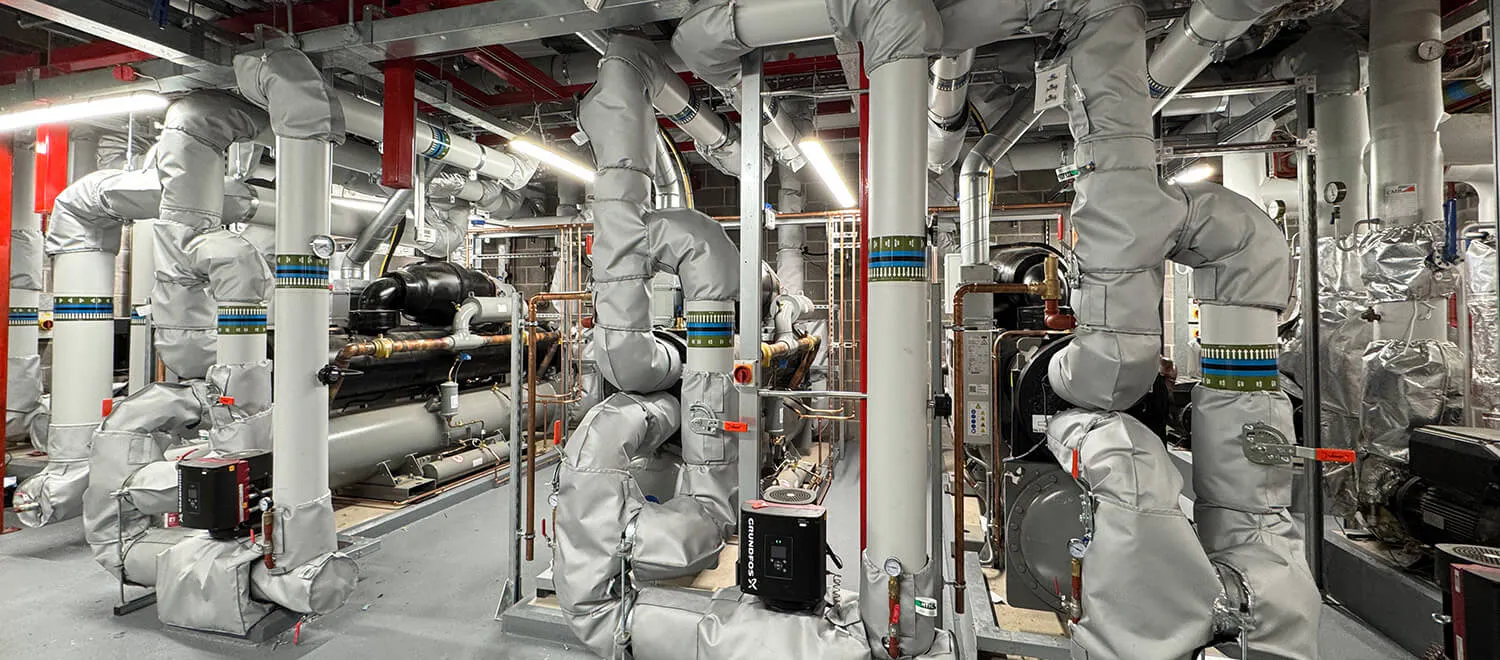
From initial feasibility through to RIBA Stage 3 design and Client Engineer role during installation, we delivered a fully operational heat pump chiller system which was commissioned in September 2024. Providing our energy dashboard to provide ongoing energy analysis and optimisation, the initial scheme is operating at seasonal CoPs greater than 5 and projected to cut carbon emissions by approximately 2,200 tonnes over 20 years, while significantly reducing operating costs an increasing comfort.
Scope
We were appointed to undertake an initial feasibility assessment of the existing heating and cooling systems at Ty Penallta, investigating the causes of longstanding underperformance and identifying options for a low carbon replacement solution - including the opportunity to repurpose an existing but unused closed-loop borefield. Following the feasibility assessment, we were reappointed in February 2023 to develop a full RIBA Stage 3 design for the preferred Heat Pump Chiller solution, including P&IDs, 3D general arrangement drawings, equipment specifications, control strategy, electrical schematics and a full tender and procurement pack. We were retained as Client Engineer and project manager to oversee installation and commissioning of the scheme.
Services
Technical Assessment, RIBA Stage 2–3 Design, Client Engineer, Commissioning
Solution
Three 400 kW water source heat pumps supply heat and cooling to short term thermal stores. Challenges were to maintain heat to a live building services throughout the construction stages. The ground source borefield infrastructure provides seasonal energy storage, whilst large hot and cold thermal stores provide dynamic demand fluctuations during the days. The entire system was designed to capture and reuse the building's own waste thermal energy, dramatically improving efficiency year-round